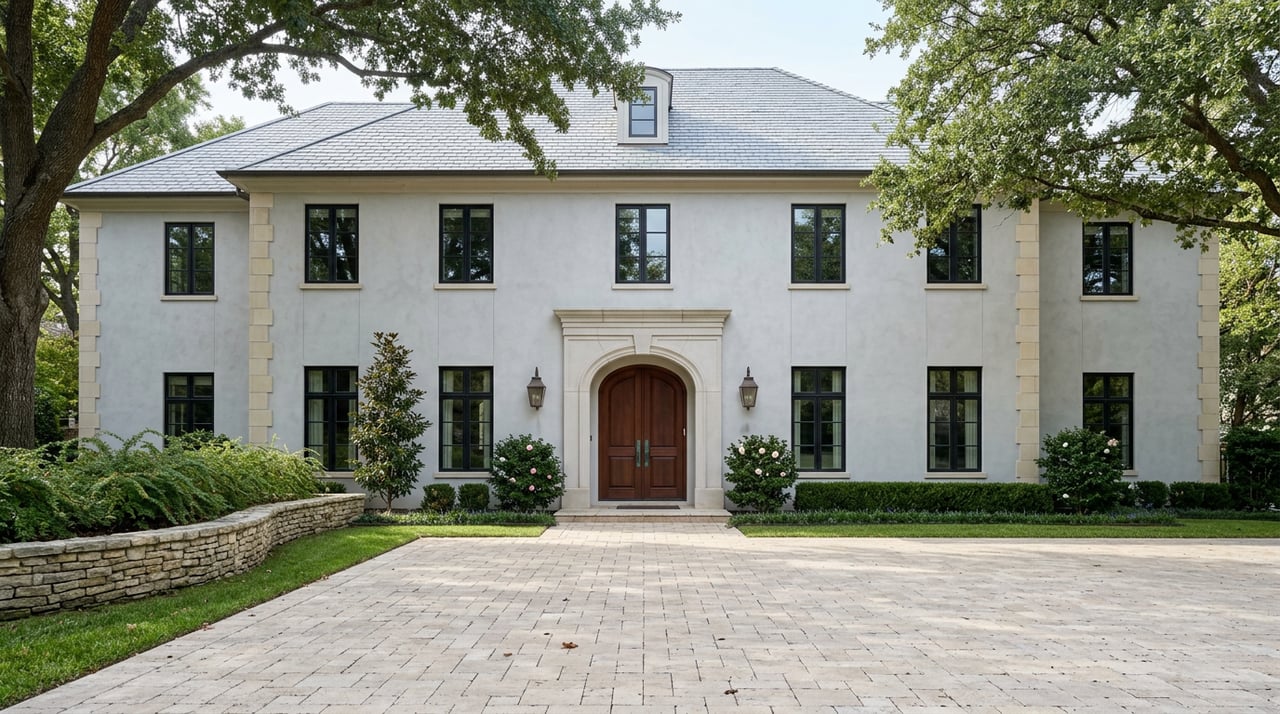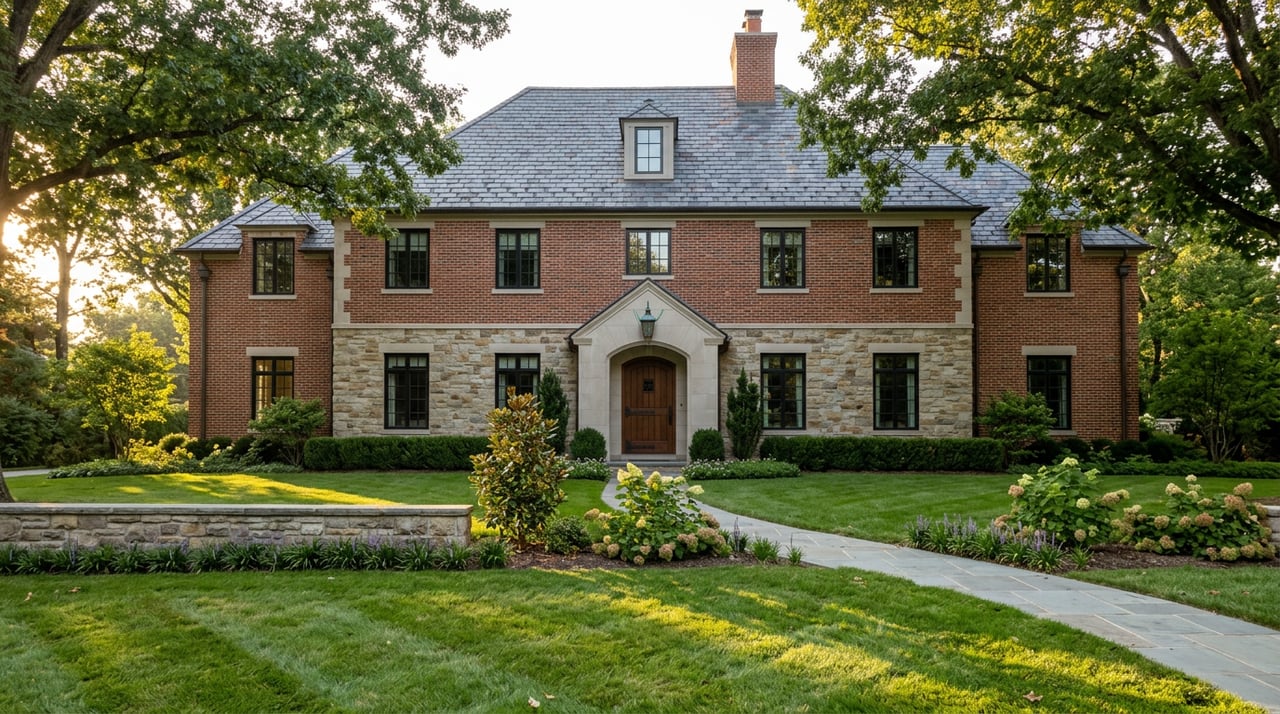
In late 2025, a French Normandy estate behind the gates of Morrocroft Estates closed for $9.68 million, becoming the second-highest residential sale on record in Canopy MLS. That is the headline. It is also the least useful part of the story if you own a home in this community and are wondering what your own sale might look like.
The estate first hit the market in July 2024 asking $13.25 million. It did not sell at that number. It did not sell close to that number for more than a year. What finally moved it was a $1.75 million price repositioning that brought the ask down before the home went under contract in mid-September 2025, roughly fourteen months after it first listed. The agent who represented the seller, Steve Lonnen of SL Home Group, described the process as one built on strategy and stewardship, saying the goal was to protect the privacy and integrity of the community while every piece of marketing, from private events to digital storytelling, was handled with intention and discretion.
Strip away the record-breaking language and you get a more instructive fact: this sale took fourteen months, a public price cut of more than 13 percent from the original ask, and a level of discreet, patient marketing that most sellers never see discussed. That is the real lesson for anyone weighing a listing inside Morrocroft's gates.
The Number That Doesn't Match the Comps
Here is where the math gets interesting. The estate was described as nearly 14,000 square feet. At $9.68 million, that works out to just under $700 per square foot. In the twelve months of closed sales tracked through mid-2026, single-family homes in Morrocroft Estates sold at a median of roughly $548 per square foot, with a median closing price near $2.93 million.
That gap matters. It means the record sale did not close at a premium consistent with typical Morrocroft pricing. It closed at a meaningful premium above it, even after the seller absorbed a seven-figure reduction from the original ask. In other words, the buyer wasn't pricing the home against recent comps in the neighborhood. They were pricing something that per-square-foot math doesn't fully capture: scale, provenance, and a specific kind of privacy that only a handful of estates in Charlotte can offer.
This is the part sellers tend to misread. A record price does not mean the market will bear any number you attach to a listing. It means that at the very top of an already exclusive enclave, price and square footage stop moving in lockstep, and the negotiation becomes less about the comp sheet and more about how patiently you're willing to hold your position while the right buyer is found.
What a Typical Morrocroft Sale Actually Looks Like
Most homes in this community are not testing a $13 million ceiling, and their timelines look nothing like the record sale's. In the two-year window of closed sales tracked through mid-2026, single-family closings in Morrocroft Estates have ranged from about $2.09 million to $9.69 million, with a median of 71 days on market. In the trailing twelve months of that same data, 22 single-family homes closed in the neighborhood at a median price near $2.93 million.
That 71-day median is the number that should anchor a seller's expectations more than the record sale does. It reflects a community where most homes, built primarily from the late 1980s through the early 1990s on lots running roughly a third of an acre to well over an acre, sell in a fairly conventional window once they're priced to the current market. The lesson from the record sale isn't that patience always means fourteen months. It's that the further above the neighborhood's typical price band you list, the more that patience becomes the entire strategy, because the buyer pool for a trophy estate is small and doesn't operate on the same calendar as the rest of the market.
The Part of the Community the Comp Sheet Doesn't Show
Morrocroft Estates is a single guard-gated community, but it is not a uniform one. A comparable single-family sale earlier this year, a 7,486-square-foot estate on Morrocroft Farms Lane that closed for $5.65 million in February 2026, illustrates why. That listing specifically called out its rear gate, which offers direct access to Sharon Elementary and the Foxcroft Swim and Racquet Club, framing that access as a distinct selling point rather than a general neighborhood amenity.
That is a granular fact, and it matters more than it looks. Inside a roughly 90-homesite enclave where every address carries the same gated prestige, buyers are still parsing differences at the lot level: which streets sit closest to the manned Sharon Road entrance, which homes have rear gate access to schools and recreation, which lots back to mature tree cover versus a neighboring driveway. A seller who treats the whole community as one undifferentiated luxury tier is missing the exact detail that shaped how a recent comparable sale was marketed and priced.
Why Discretion Isn't Just a Buzzword Here
The language used around the record sale, protecting privacy while running a comprehensive marketing push, is not incidental. It reflects an operational reality of selling inside a 24-hour manned, gated community. Showings have to be scheduled through a controlled entry point. Marketing that works elsewhere, broad public open houses, street-level signage, wide syndication of interior photography, can work against a seller's interests in a community where residents and other homeowners association members expect a level of discretion that public listings don't usually provide.
That tension, between marketing broadly enough to reach the right buyer and protecting the privacy the address is known for, is exactly where a seller's strategy either works or stalls. The fourteen-month timeline on the record sale wasn't a failure of marketing. It was the cost of doing it the right way in a community where the wrong kind of exposure can suppress the very demand a seller is trying to attract.
What This Means If You're Weighing a Listing
A few practical takeaways follow directly from this case, not from generic luxury-market advice:
- Price against the neighborhood's actual trailing data, not the headline sale. The 71-day median and the sub-$3 million median closing price are a far more reliable planning baseline than a single record transaction.
- If your home sits meaningfully above the neighborhood's typical price band, plan your marketing timeline in months, not weeks, and build in room for at least one strategic repositioning if the initial ask doesn't draw the right buyer within a reasonable window.
- Know your lot's specific access points before you price it. Rear gate proximity to schools and amenities, street position relative to the main entrance, and lot depth all shape how a buyer evaluates the home relative to others carrying the same address.
- Treat discretion as a marketing requirement, not an afterthought. The showing process, the photography distribution, and the pace of public exposure all need to be calibrated to the community's expectations, not just the listing's.
A hands-on understanding of renovation scope and construction quality also shapes how a Morrocroft estate should be priced before it ever reaches the market. Homes built in the late 1980s and early 1990s often carry systems and finishes that need an honest, experienced eye before a number gets attached to a listing.
FAQ
How long does it typically take to sell a home in Morrocroft Estates? Over the past two years, single-family homes in the community have sold at a median of 71 days on market. Homes priced well above the neighborhood's typical range, as the recent record sale shows, can take considerably longer.
Does a home's price per square foot in Morrocroft always track the neighborhood median? Not at the top of the market. The trailing twelve-month median has run near $548 per square foot, but the community's record sale closed at nearly $700 per square foot, reflecting a buyer paying for scale and provenance rather than a comp-driven number.
Does location within the gated community affect value beyond the shared address? Yes. Recent comparable sales have specifically marketed features like rear gate access to nearby schools and recreation facilities, indicating that buyers evaluate lot position and access points even within a single gated enclave.
If you're considering what your own Morrocroft estate is worth, or how to plan a listing that protects your privacy while reaching the right buyer, Matthew Alexander brings both institutional luxury marketing and hands-on construction expertise to that conversation. Schedule a consultation to talk through your specific address, its access points, and the pricing strategy that fits it.