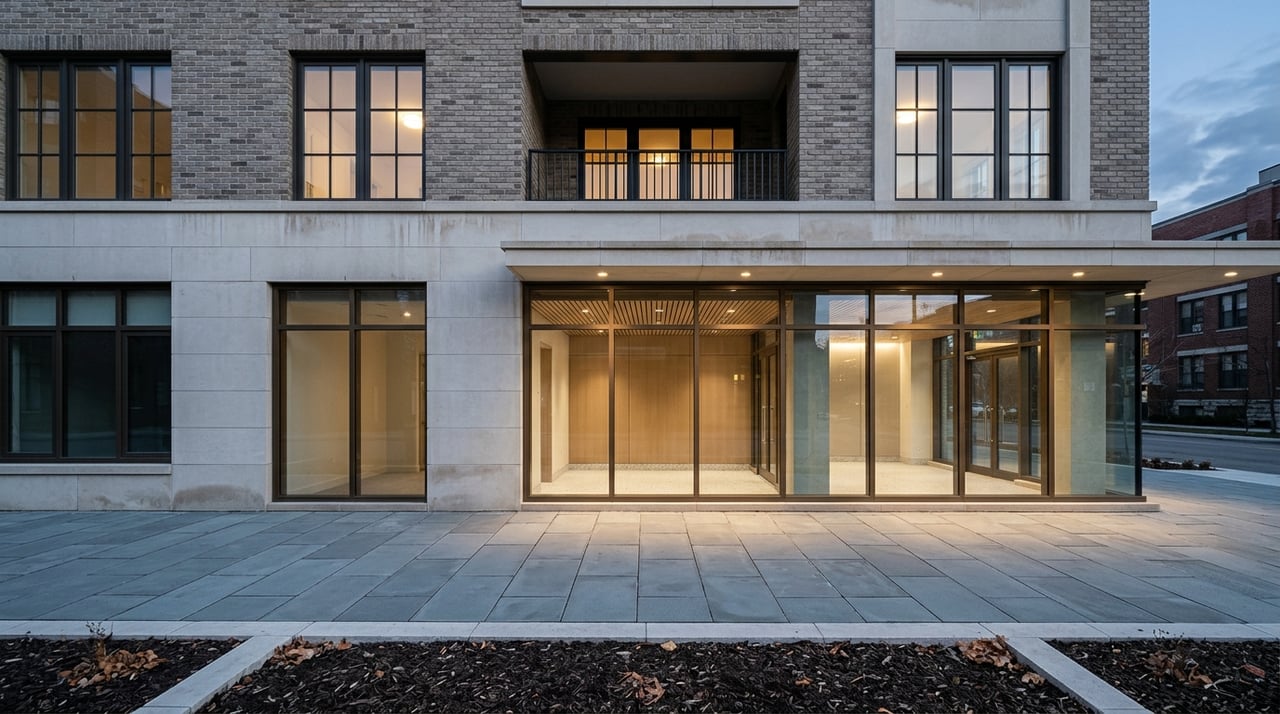
If you are considering launching a boutique luxury condo project in SouthPark, timing and positioning matter as much as the site itself. SouthPark is no longer just a shopping and office destination. It is evolving into a more connected, walkable mixed-use district, which creates real opportunity for well-planned ownership product. In this guide, you will see where the strongest demand signals are, what kind of product fits the market, and how to think about pricing, entitlement, and presales with more confidence. Let’s dive in.
Why SouthPark Stands Out
SouthPark already has the fundamentals that support a luxury condo launch. SouthPark Community Partners reports 28,600 employees, 7,600 residents, more than 1,100 businesses, and 18 million non-work visits in 2025. The same source also notes a 130-minute average dwell time, which points to a district where people do more than arrive and leave quickly.
Planning materials add even more weight to that story. SouthPark has been described as roughly 32,000 residents and the city’s second-largest employment center. That combination of jobs, daily activity, and long-established retail and office presence gives a boutique condo project a strong base to build from.
The area also carries long-term prestige. The Urban Land Institute described SouthPark as an affluent south-side mixed-use district that functions as a regional shopping destination, an office address, and a downtown for more than 30,000 residents. For a developer or project owner, that means you are not trying to create demand from scratch. You are stepping into an established district that is actively becoming more urban and more walkable.
SouthPark’s Shift Toward Walkability
A successful condo launch is rarely just about the building. It is also about the direction of the district around it. In SouthPark, that direction is clear.
SouthPark Forward 2035 calls for a more walkable and energetic district through place-making, improved connections, and mobility initiatives. The SouthPark CNIP also prioritizes transportation choices, bicycle and pedestrian access, greenspace, and the kind of density expected in a mixed-use activity center.
That matters because luxury condo buyers in this setting are often looking for convenience as much as square footage. The planned Symphony Park renovation, with restaurants, micro-retail, restrooms, event lawns, public art, and Loop connections, supports that lifestyle pattern. A boutique project that aligns with these public-realm improvements can feel more relevant and more future-ready.
Where a Boutique Condo Project Fits Best
Focus on RAC-aligned sites
For site selection, the most defensible locations are those that fit Charlotte’s Regional Activity Center, or RAC, framework. Under Charlotte’s UDO, RAC areas are intended for major employment locations, cultural destinations, and mixed-use development serving both local and regional markets. High-density residential is considered appropriate where it supports vertical mixed-use and a pedestrian-oriented environment.
Charlotte Future 2040 reinforces that direction. RAC areas should have dense street networks, preferred block lengths around 400 feet, direct pedestrian and bicycle access, and a park-once environment. In practical terms, that means the best boutique condo sites are the ones that connect naturally to the larger district rather than operating like isolated islands.
SouthPark-specific planning points in the same direction. The CNIP emphasizes access by all modes, improved connectivity, greenspace, and place-making. A recent rezoning plan on Carnegie Boulevard, across from SouthPark Mall, framed redevelopment as consistent with RAC and SouthPark Forward and included strong ground-floor activation, public open space, and phased redevelopment with stacked residential and commercial uses.
Why entitlement strategy matters early
If your project needs bonus height, entitlement has direct cost implications. Charlotte’s UDO zoning administration manual ties height bonuses in RAC and related districts to affordable housing paths such as on-site affordable units, fees-in-lieu, offsite housing within one mile, or land donation.
That means underwriting cannot stop at land basis and hard costs. Early project planning should account for the value and cost of entitlement decisions from the start. For boutique product, this can shape everything from site choice to unit count to the pace of launch.
What the Current Condo Market Suggests
SouthPark’s current condo inventory is limited, and much of it appears to be legacy product. Zillow’s SouthPark condo page shows 21 listings, with asking prices ranging from about $224,750 to $1.4 million. The active mix includes one-bedroom units around 808 to 929 square feet, two-bedroom units around 1,088 to 1,248 square feet, and a small number of three-bedroom residences.
Some of those listings have been active for 283 to 300 days. That does not mean demand is absent. It suggests that product positioning has to be precise.
The broader pricing picture is also mixed, which is important for launch strategy. Realtor.com reports a SouthPark median listing price of $675,000, median days on market of 40, and median list price per square foot of $308. Redfin reports a median sale price of $675,000, median sale price per square foot of $323, about two offers on average, and 49 days on market.
At the same time, attached housing data across the region show more nuance. Canopy MLS reported in April 2026 that condo inventory was up 17.9 percent year over year and condo median prices were down 4.3 percent to $296,745, with 56 days on market. Earlier Canopy data showed townhome and condo sales above $700,001 jumping 40.7 percent year over year in April 2025, even as inventory rose sharply across many attached price ranges.
The takeaway is straightforward. High-end attached housing can sell in this market, but only when design, size, finish level, and pricing all tell a coherent story.
The Right Product for SouthPark
Lean beyond commodity units
The existing resale pool includes many smaller units, so a boutique launch may need to differentiate clearly. Based on current inventory patterns, a more compelling approach is a unit mix weighted toward larger two-bedroom-plus-den residences and three-bedroom homes, with a limited number of corner and penthouse opportunities.
That strategy aligns with SouthPark’s role as a convenience-oriented, lock-and-leave district for people who live, work, or spend significant time nearby. It also fits the Urban Land Institute’s recommendation for more housing options for senior citizens in the area. For a developer, larger plans can help create a stronger ownership identity and reduce direct competition with more common resale inventory.
Amenity expectations are already high
Luxury rentals in SouthPark have raised the bar. Projects such as Providence Row, Hazel SouthPark, Element SouthPark, The Colony Southpark, and Residence at SouthPark market features like rooftop pool decks, club lounges, concierge service, pet spas, fitness centers, golf simulators, package lockers, and secure parking.
A for-sale condo project does not need to copy that exact formula, but it does need to meet or exceed the service level in ways that feel tailored to ownership. The research suggests stronger privacy, larger storage, EV-ready parking, and more generous private outdoor space are important differentiators. In a boutique building, fewer but better-executed amenities often create more value than a long list of shared spaces with limited daily use.
How to Price and Release Thoughtfully
A broad, undisciplined launch can weaken a boutique project before it gains traction. The current market points toward a more curated release strategy. With some SouthPark listings lingering and a visible gap between typical attached price points and the upper end of the market, pacing matters.
A staged release can help protect premiums for the best views, corner stacks, and top floors. It also gives the project team room to test demand, refine messaging, and avoid flooding the market with too many similar homes at once. In a boutique building, scarcity is part of the value proposition, so the sales plan should reinforce that.
Presales should support confidence, not volume alone
For presales, a smaller first phase may be the stronger move. Releasing a curated group of residences first can help establish price credibility and create a clear benchmark for later phases. This approach is especially useful when the market includes both premium demand and slower-moving resale competition.
The most plausible buyer pool, based on the research, includes affluent downsizers, executives, and relocation buyers who want proximity to SouthPark Mall, Phillips Place, office centers, and the Loop. Those buyers are often less motivated by sheer unit count and more focused on privacy, convenience, quality, and confidence in execution.
Why Execution Will Decide the Outcome
In SouthPark, location alone will not carry a boutique luxury condo project. The district offers strong fundamentals, but buyers at this level are selective. They will compare the project not just with resale condos, but also with luxury rental amenities, renovated homes, and other high-end ownership options across Charlotte.
That is why execution has to be consistent from entitlement through design and sales. Site selection should align with the district’s walkable mixed-use future. The unit mix should solve for ownership demand rather than mirror the resale pool. Pricing should feel disciplined, and the launch plan should create momentum without sacrificing long-term value.
For developers and project owners, this is where experienced guidance can make a measurable difference. In a market like SouthPark, the details behind the story often matter just as much as the story itself.
If you are evaluating a boutique luxury condo opportunity in SouthPark, working with an advisor who understands project sales, positioning, construction, and local buyer behavior can help you reduce risk and sharpen your strategy. To discuss site selection, unit mix, pricing, or launch planning, connect with Ready 4 Sale, LLC.
FAQs
What makes SouthPark a strong location for a luxury condo project?
- SouthPark combines major employment, established retail and office demand, long visitor dwell times, and ongoing plans for more walkability, greenspace, and mixed-use growth.
What type of condo product fits SouthPark best?
- The current market suggests a stronger opportunity for larger two-bedroom-plus-den and three-bedroom residences, plus a limited number of premium corner or penthouse units.
Why does RAC zoning matter for SouthPark condo development?
- RAC zoning supports high-density mixed-use development in major activity centers and aligns with SouthPark’s planning goals around walkability, vertical mixed-use, and pedestrian-oriented design.
How should a SouthPark boutique condo project approach amenities?
- A for-sale project should match the area’s high amenity baseline while emphasizing ownership-focused features such as privacy, storage, EV-ready parking, and meaningful outdoor space.
What is the best presale strategy for a SouthPark condo launch?
- The research supports a staged release with a curated first phase so you can protect premiums, test demand, and avoid oversupplying the market too early.
Who is the likely buyer for a boutique luxury condo in SouthPark?
- The most likely buyers include affluent downsizers, executives, and relocation buyers seeking a convenient, lock-and-leave home near SouthPark’s retail, office, and mixed-use destinations.