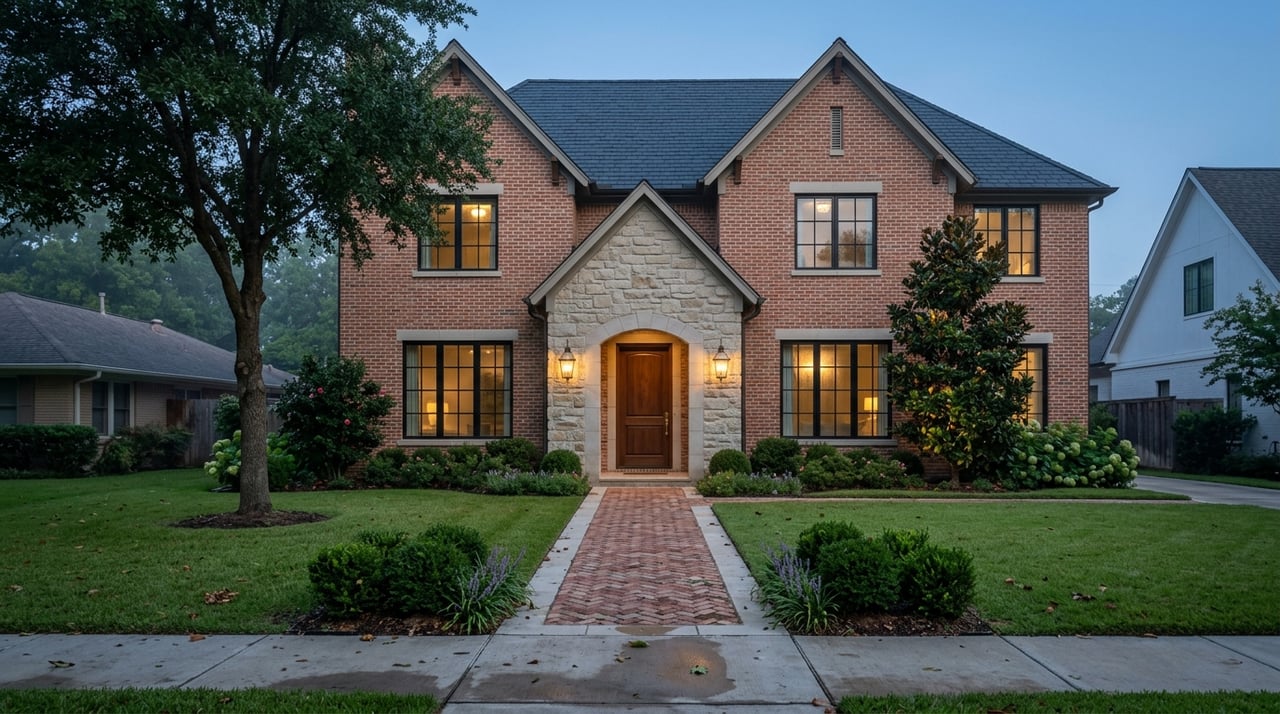
If you have ever driven through Myers Park and felt that the neighborhood looks polished without feeling repetitive, there is a reason for it. The homes here were shaped by an intentional early plan, a strong architectural vocabulary, and a streetscape designed to feel open, green, and cohesive. If you are buying, selling, renovating, or building in Myers Park, understanding those design patterns can help you read value more clearly. Let’s dive in.
Why Myers Park Feels So Distinct
Myers Park began in 1911 as Charlotte’s premier streetcar suburb, planned by John Nolen and Earle Sumner Draper. Instead of growing as a patchwork of unrelated subdivisions, it was laid out as a unified neighborhood with curving streets, generous setbacks, and extensive tree planting.
That planning still shapes the experience of the neighborhood today. Queens Road formed a central spine, larger lots were reserved for prominent homes, and smaller lots for cottages were placed on side streets. Front-yard fences were forbidden in the original plan, which helped create the open, park-like character that still defines Myers Park.
The result is a neighborhood where different home styles can sit side by side and still feel visually connected. Detached single-family homes, mature willow oaks, and a consistent exterior palette of brick, weatherboard, and wood shingles all reinforce that sense of order and continuity.
Colonial Revival Leads Myers Park
If one style best represents Myers Park, it is Colonial Revival. After 1919, it became the neighborhood’s dominant architectural language, especially as landmark homes helped establish it as a local standard.
The Duke Mansion is widely recognized in the city’s historic inventory as Charlotte’s finest Colonial Revival example. Its influence helped shape later streets, especially Queens Road West, where two-story red-brick Colonial homes based on Georgian prototypes became a defining image of the neighborhood.
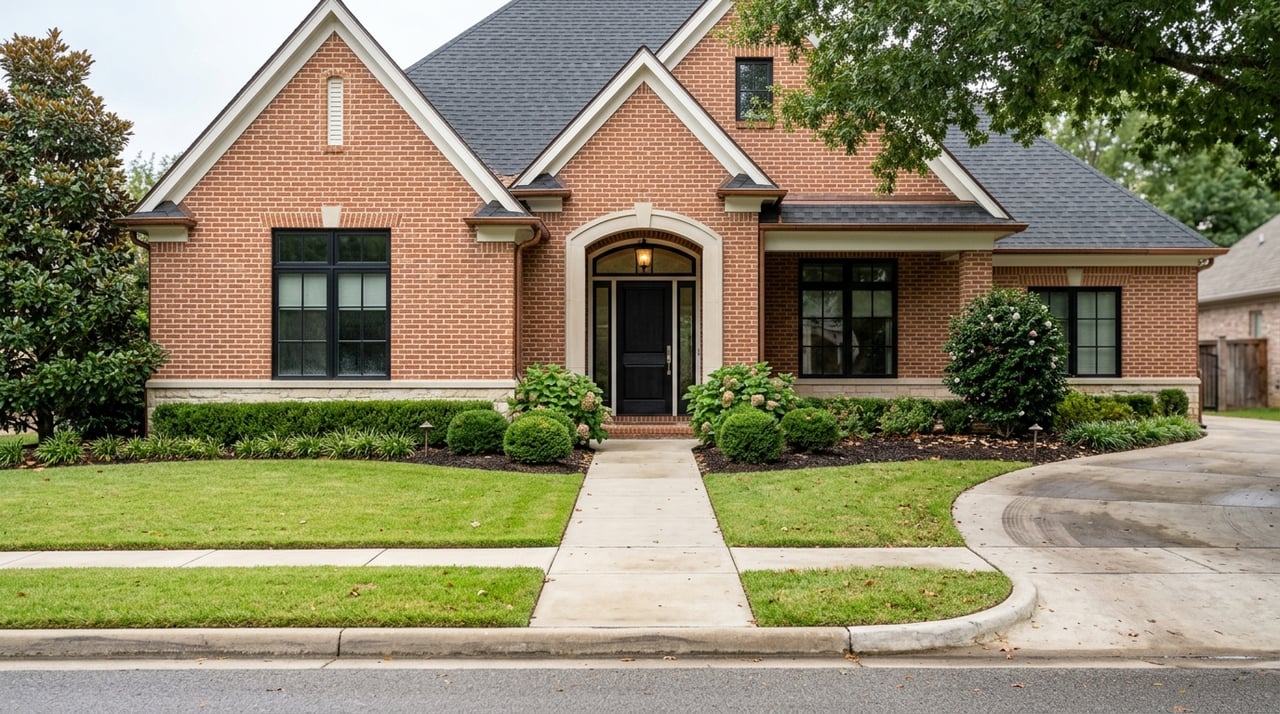
For you as a buyer or seller, Colonial Revival often signals the traits many people associate with classic Myers Park homes. Think symmetry, balanced proportions, brick facades, and a sense of permanence that fits the neighborhood’s most iconic addresses.
What Colonial Revival Often Conveys
- Symmetry and formal curb appeal
- Brick exteriors with traditional detailing
- A strong relationship to larger estate lots
- A historically grounded look that remains highly recognizable in Myers Park
This matters because architecture here is not just decoration. In Myers Park, Colonial Revival is part of the neighborhood’s visual identity and long-term appeal.
Tudor Revival Adds Drama and Texture
Tudor Revival is the other major signature style in Myers Park. According to the National Register inventory, the neighborhood has one of the best collections of Tudor Revival homes in North Carolina.
You can see this style most clearly along Hermitage Road, Queens Road, and Hermitage Court. These homes often stand out through steep gables, half-timbering, mixed materials, and asymmetrical massing that create a more picturesque and storybook-like appearance.
Where Colonial Revival feels formal and balanced, Tudor Revival often feels layered and expressive. That contrast is part of what makes Myers Park visually rich without feeling disconnected.
Key Tudor Revival Features
- Steeply pitched rooflines
- Half-timbered wall sections
- Brick, stucco, or mixed-material exteriors
- Irregular massing and varied facades
For buyers, Tudor homes often offer some of the neighborhood’s most memorable curb appeal. For sellers, that distinct character can be a major part of how a property is positioned and marketed.
Bungalows Show Myers Park’s Early Layer
Not every important home in Myers Park is a large estate residence. Bungalows were present from the neighborhood’s earliest years, especially on smaller lots and side streets, and they remain an essential part of the architectural mix.
This is especially clear in Hermitage Court, a Charlotte Local Historic District within Myers Park. The city describes it as an eclectic mix of Bungalow houses and early 20th-century revival styles, with mature landscaping and much of the original character still intact.
That matters because it shows how Myers Park developed with range, not just grandeur. Larger homes and smaller homes were both part of the original design logic, which is one reason the neighborhood can feel refined while still offering variety in scale.
Why Bungalows Matter Here
- They reflect Myers Park’s earliest residential phase
- They often sit on smaller lots that still follow the neighborhood’s original setback patterns
- They add architectural variety without breaking the streetscape
- They help explain why renovated older homes can fit naturally into the area
For anyone considering a remodel, bungalow homes are a useful reminder that compatibility often matters more than size alone.
Secondary Styles Add Depth
While Colonial Revival, Tudor Revival, and Bungalow influences define most of Myers Park’s architectural identity, they are not the whole story. The neighborhood also includes Mediterranean-influenced designs, Spanish Colonial Revival, Dutch Colonial, Rectilinear, and English Gothic examples.
These styles are less common, but they play an important role in the neighborhood’s design quality. Several landmark homes and churches were designed by notable Charlotte architects including C.C. Hook, Louis Asbury, Franklin Gordon, Martin Boyer, and James M. McMichael.
For you, this means Myers Park is best understood as a highly curated architectural environment rather than a one-style neighborhood. The variety works because it sits inside a strong framework of streets, lots, trees, and consistent scale.
The Style Timeline Still Matters
Architecture in Myers Park did not arrive all at once. Early homes included Rectilinear designs and some Mediterranean influence, the 1920s brought more Tudor Revival work, and the 1930s through the 1950s returned strongly to Colonial Revival.
That timeline helps explain why even later homes in Myers Park can still feel historically grounded. By the mid-20th century, the neighborhood had already developed a strong visual language, and many homes continued to repeat that two-story brick vocabulary long after national style trends had shifted.
For buyers and sellers, this continuity is important. It is one reason a home built later can still feel deeply connected to the older streetscape, especially when the exterior respects established proportions and materials.
Renovated Homes Need Exterior Compatibility
Renovation has long been part of the Myers Park story. Some older houses were moved from downtown and remodeled into the neighborhood’s preferred Colonial Revival language, while many other homes evolved over time without losing their place in the overall streetscape.
The National Register materials suggest that Myers Park has retained a strong degree of original character, with less unsympathetic exterior remodeling than some other historic areas. In practical terms, that means successful renovations usually preserve or reinforce the visual logic of the street.
If you are evaluating a renovated bungalow or older cottage, the key question is often not how new the interior feels. It is whether the exterior still reads as part of Myers Park.
What Usually Matters Most in a Renovation
- Setbacks that align with surrounding homes
- Rooflines that feel consistent with the street
- Exterior materials that fit the neighborhood palette
- Massing and scale that do not overpower the lot
- Landscaping that works with the tree-lined setting
This is where experienced real estate guidance can make a difference. A home may be beautifully updated inside, but in Myers Park, the outside still plays a major role in how buyers perceive authenticity and value.
Newer Custom Homes Need Restraint
New construction can succeed in or near Myers Park, but usually not by trying to overpower its setting. Within the broader National Register district, buildings constructed after 1959 are considered non-contributory, which helps explain why newer homes can stand out visually even when they are well designed.
Charlotte’s local historic district rules are also important in specific areas such as Hermitage Court. In local historic districts, exterior work, additions, new construction, moving, demolition, and some landscaping changes require a Certificate of Appropriateness, while normal maintenance such as in-kind re-roofing or planting flowers generally does not.
The practical takeaway is simple. A successful custom home in Myers Park usually echoes the neighborhood’s scale, setbacks, roof proportions, and material palette instead of competing with the street through novelty alone.
Why Architecture Affects Buyer Interest
In many neighborhoods, architecture is just one feature on a checklist. In Myers Park, it is part of the lived experience of the street.
The original planning framework, open front yards, mature canopy, and historically consistent housing stock all work together. That combination helps explain why homes here often feel tied to place in a way that is immediately visible when you drive through the neighborhood.
This does not mean architecture guarantees a universal price premium. Research on historic districts shows mixed but often positive effects on values, with results varying by neighborhood and local development context. The safer conclusion is that architecture and preservation often support desirability, but value still depends on the specific property, condition, and market timing.
What Buyers and Sellers Should Watch For
If you are buying in Myers Park, architectural style can help you understand more than appearance alone. It can give you clues about lot placement, renovation expectations, and how easily a home fits the broader streetscape.
If you are selling, your home’s style can shape how it should be presented. A Colonial Revival home may call for emphasis on symmetry and classic form, while a Tudor home may benefit from highlighting craftsmanship, rooflines, and material texture. A renovated bungalow may stand out most when the story centers on preserved exterior character paired with updated interiors.
In a neighborhood as design-driven as Myers Park, presentation works best when it respects the home’s architectural identity instead of trying to flatten every property into the same marketing language.
For owners considering improvements, the same principle applies. The more your decisions align with the neighborhood’s established rhythm, the more naturally your home tends to fit the setting.
If you are considering a purchase, sale, renovation, or custom build in Myers Park, working with an advisor who understands both market positioning and how homes are actually put together can help you make clearer, more confident decisions. To discuss strategy for your property, connect with Ready 4 Sale, LLC.
FAQs
What architectural styles are most common in Myers Park homes?
- The most common signature styles are Colonial Revival, Tudor Revival, and Bungalow or Craftsman-influenced homes, with smaller numbers of Mediterranean-influenced, Dutch Colonial, Spanish Colonial Revival, Rectilinear, and English Gothic examples.
What makes Colonial Revival homes important in Myers Park?
- Colonial Revival became the dominant style in Myers Park after 1919 and is strongly associated with the neighborhood’s larger estate homes, brick facades, symmetrical design, and some of its most iconic addresses.
Where can you see Tudor Revival homes in Myers Park?
- Tudor Revival homes are especially visible along Hermitage Road, Queens Road, and Hermitage Court, where steep gables, half-timbering, and mixed materials create some of the neighborhood’s most picturesque houses.
Why do bungalows matter in Myers Park architecture?
- Bungalows reflect the neighborhood’s early development on smaller lots and help show that Myers Park was planned with a mix of home sizes that still fit a unified streetscape.
How much of Myers Park is historically protected?
- Myers Park includes a broader National Register historic district, while Hermitage Court is also a Charlotte local historic district with local review requirements for certain exterior changes, additions, new construction, demolition, moving, and some landscaping work.
What should you consider before renovating a Myers Park home?
- The biggest considerations are usually exterior compatibility, including setbacks, roofline, materials, massing, and how the home fits the tree-lined streetscape.
What matters most for a newer custom home in Myers Park?
- Newer homes tend to fit best when they echo the neighborhood’s established scale, roof proportions, setbacks, and material palette rather than trying to stand apart through a dramatically different exterior approach.
Why do buyers care so much about architecture in Myers Park?
- Buyers often care because architecture in Myers Park is closely tied to the neighborhood’s identity, and the original planning, mature canopy, and historically consistent homes all shape how the area feels day to day.